October 31, 2026 · 3 min read
Learning Through Coloring: A Simple Way to Practice First English Words
Explore learning coloring pages for kids with simple letter games, first English words, and a gentle print-and-play routine using WHIMO books.
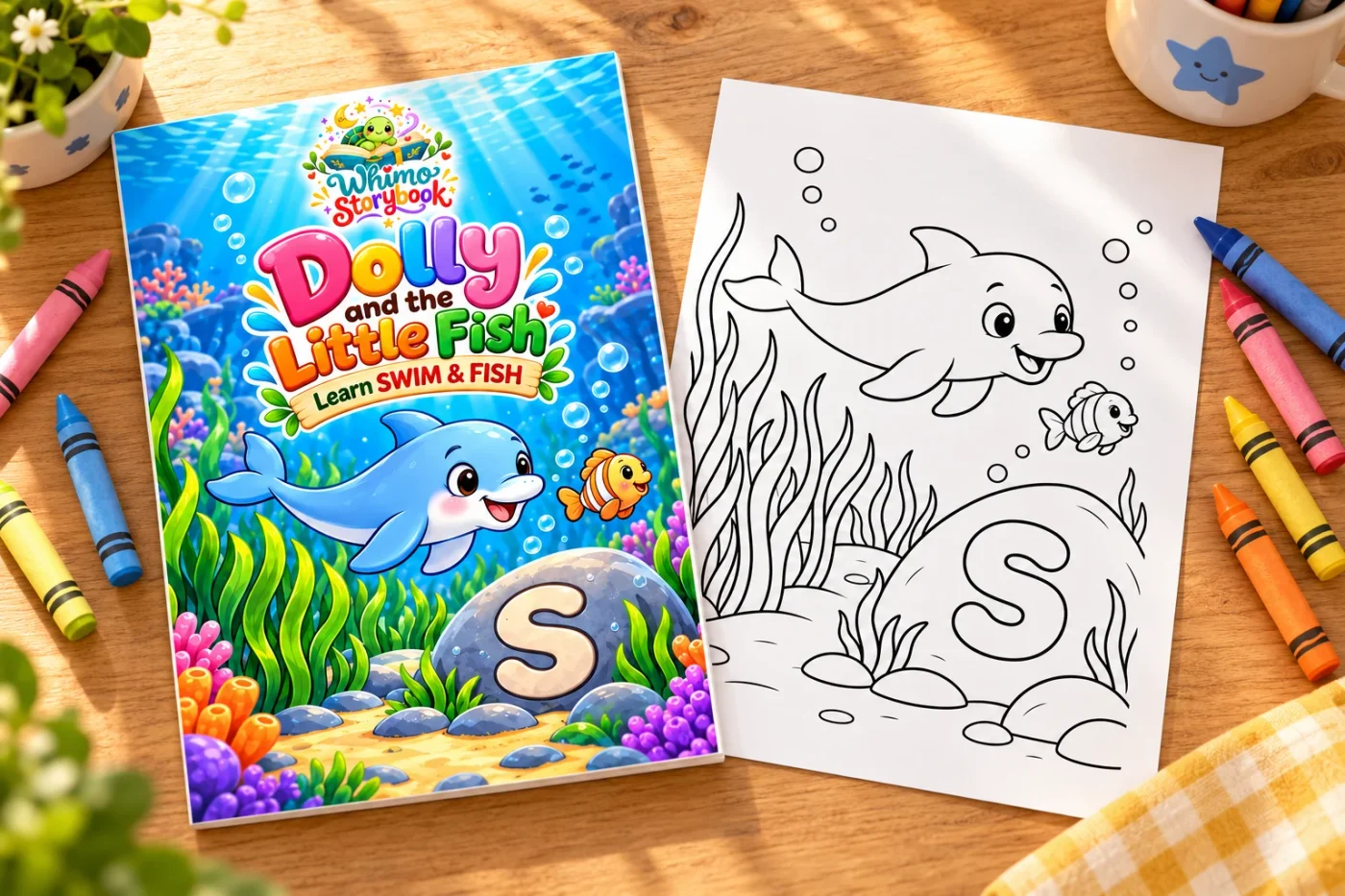
A blue crayon, a friendly dolphin, and one big letter can be enough to begin a conversation. You do not need a full lesson plan to introduce an English word. Sometimes, the best starting point is simply sitting beside your child and noticing what is on the page.
Learning coloring pages for kids offer a way to bring pictures, letters, and spoken words into the same activity. The aim is not to finish quickly or memorize every letter. It is to make a new word feel familiar through a small, enjoyable experience.
Start with a picture your child wants to explore
Choose a subject that invites curiosity. An animal, a cozy scene, or a familiar object gives you something concrete to talk about before looking at the letters.
In Dolly’s Underwater Adventure Coloring Book, the words are SWIM and FISH. Dolly is a little dolphin exploring the ocean with fish companions. That gives you an easy opening: “Can you find the fish?” or “Show me how Dolly might swim.”
Let your child point, gesture, or answer in the language they know best. You can then model the English word naturally: “Yes, a fish!” Understanding can come before speaking.
Notice one letter at a time
WHIMO’s Word Coloring Books introduce words one letter per page before bringing the whole word together. Treat that structure as an invitation to explore, rather than a test.
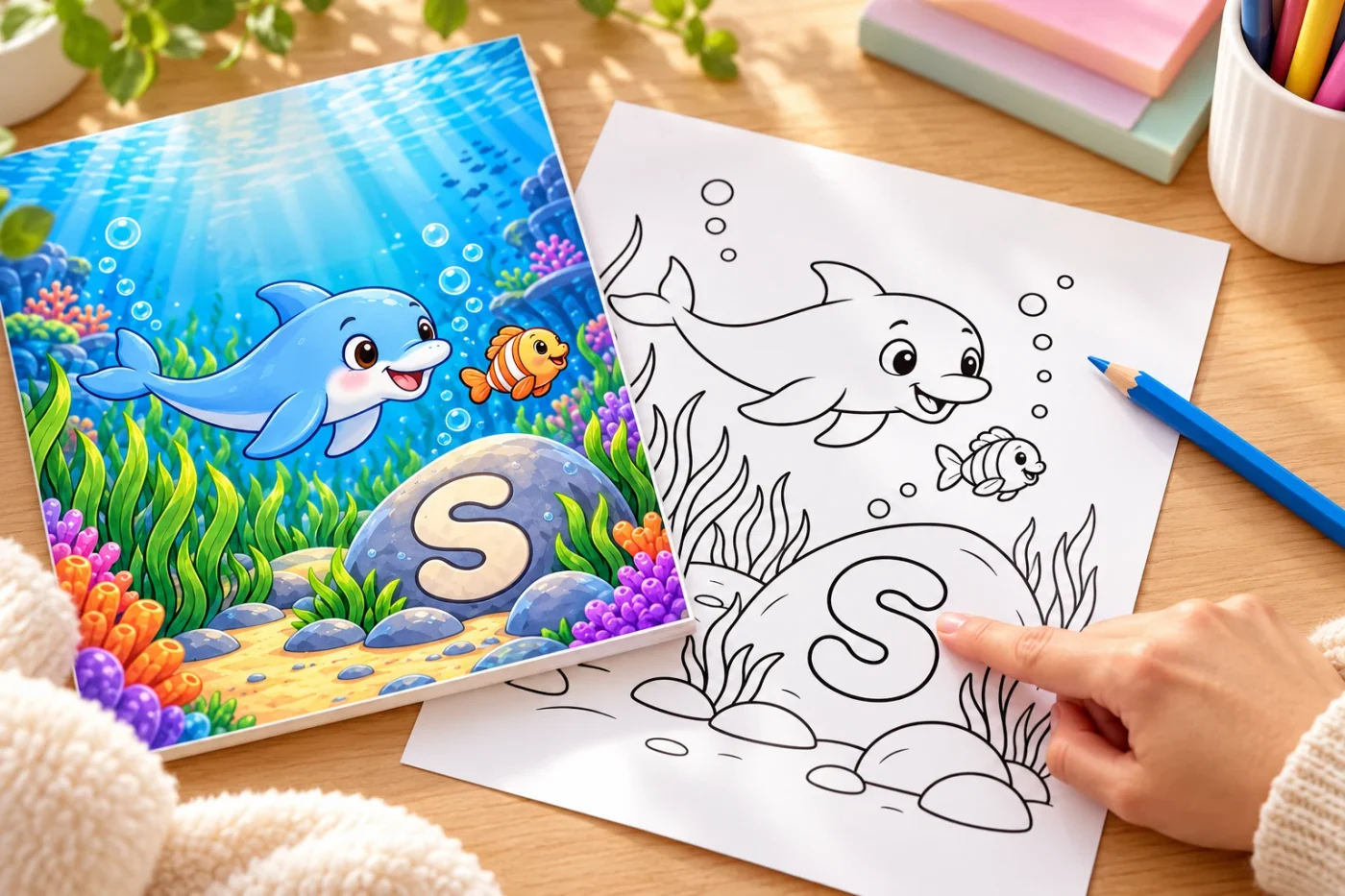
Point to a letter and name it. Let your child trace its shape with a finger or color it in a favorite shade. Later, look for that letter again. When you reach the complete word, read it aloud while pointing to the picture.
Letter names, letter sounds, and whole words are different skills. You do not need to teach them all in one sitting. Avoid expecting a child to sound out an unfamiliar word just because they recognize its letters.
Try a gentle ten-minute routine
Begin with a minute of looking. Ask what your child notices, then choose one word to say together. Spend a few minutes coloring and return to the word once or twice during the activity.
With SWIM, you might move your hands like fins. With FISH, you might point out the fish in the illustration. Finish by showing the page to someone else: “We colored a fish today.”
These times are only a guide. If your child wants to stop after three minutes, stop. A pleasant short activity is a better foundation for returning tomorrow than a page finished under pressure.
Make repetition playful
Revisit the same page in a new way. Find something blue, count the visible bubbles together, or arrange homemade letter cards to match a printed word. An adult can write the cards; they are an optional extension, not an included part of the book.
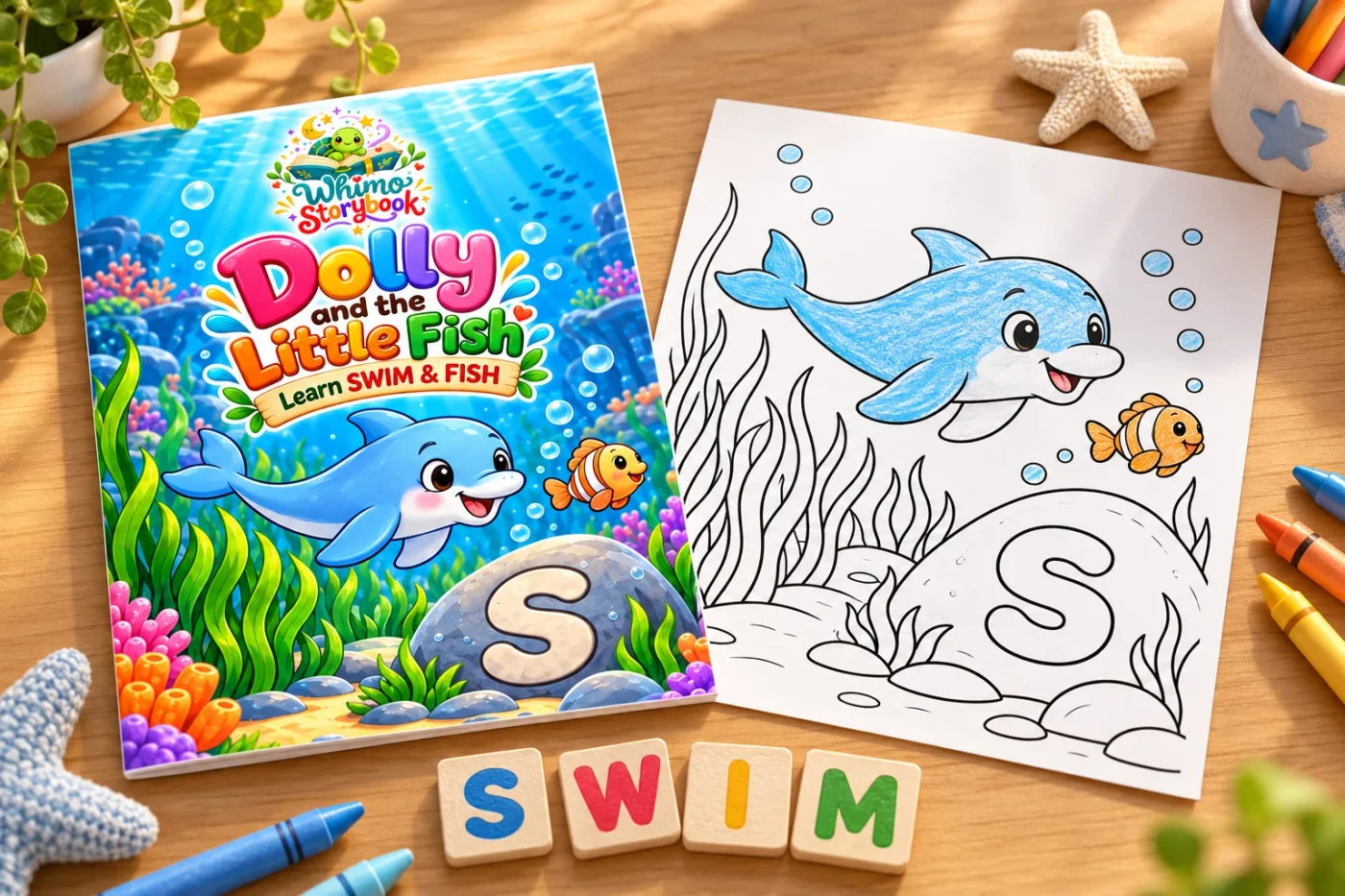
Offer choices such as “Blue or green?” rather than asking a string of questions with right answers. If your child says nothing, you can simply describe your own work: “I’m using blue for the water.”
Keep the goal small
These pages can provide opportunities to hear words, notice letters, and practice using crayons. They do not guarantee reading progress, and children will engage differently. Follow your child’s interest and keep the activity relaxed.
Ready to begin? Explore Dolly’s underwater word adventure, print one page, and choose one word to enjoy together.
Ready for some screen-free fun?
Browse our printables