October 31, 2026 · 3 min read
Learning Colors, Letters, and Feelings Through Story-Based Play
Explore story-based learning activities for preschool children with WHIMO coloring pages, simple color choices, letter play, and gentle feelings prompts.
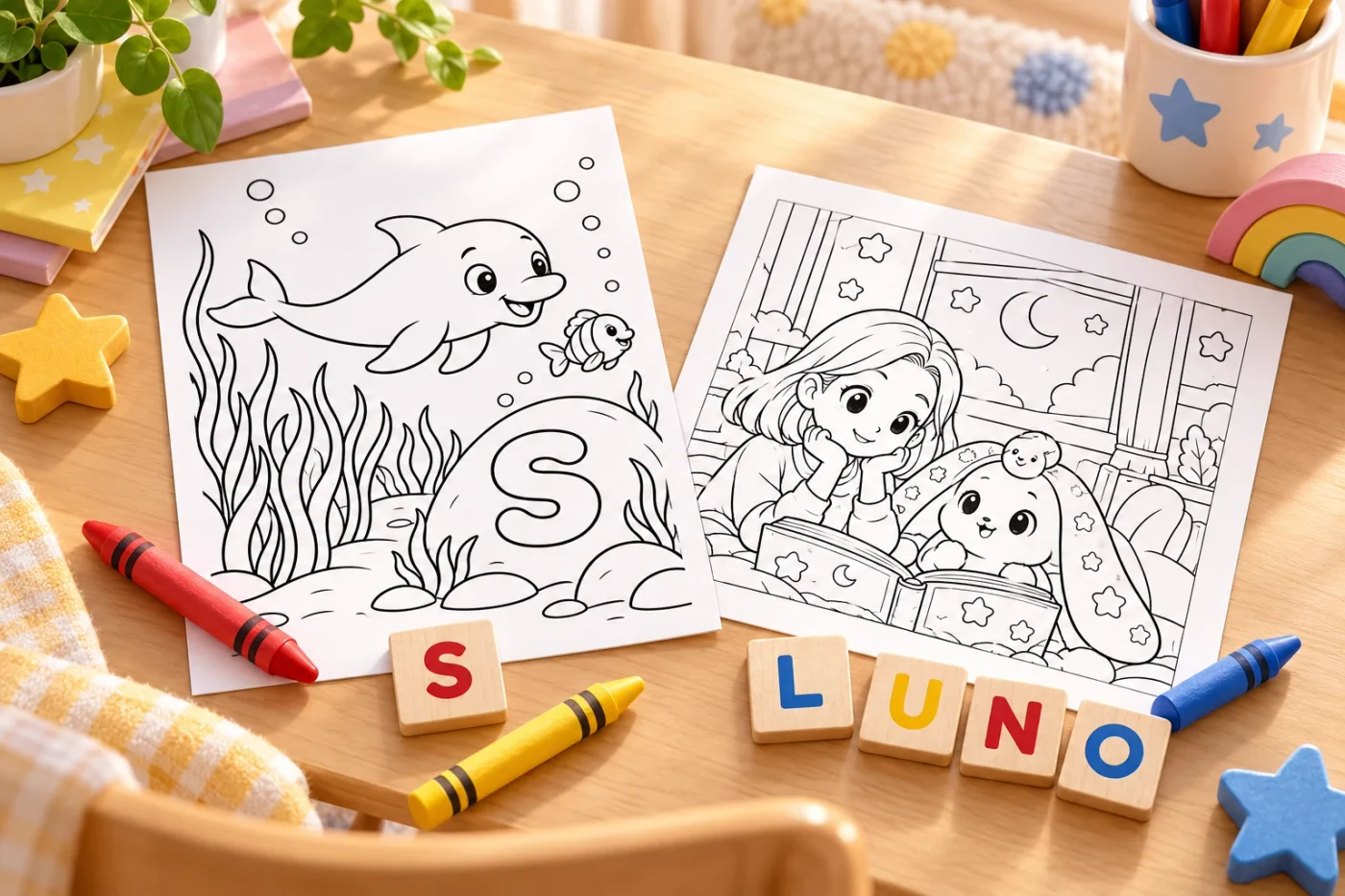
A child notices a dolphin, chooses a blue crayon, and asks what the big letter means. Later, a story about a new classroom opens a question about feeling worried. These are small moments, but they offer plenty to explore together.
Story-based learning activities for preschool children can start with one picture and one shared idea. You do not need to cover colors, letters, and feelings in every session. A story provides the setting; your child’s curiosity helps choose the direction.
Let the picture introduce the activity
Begin by looking together. Ask, “What can you see?” or describe something yourself. Avoid giving a long set of instructions before your child has had a chance to explore.
In Dolly’s Underwater Adventure Coloring Book, a friendly dolphin and fish create an ocean setting for the words SWIM and FISH. You might start with the animals, a favorite color, or an action. All are reasonable entry points.
Explore colors through choices
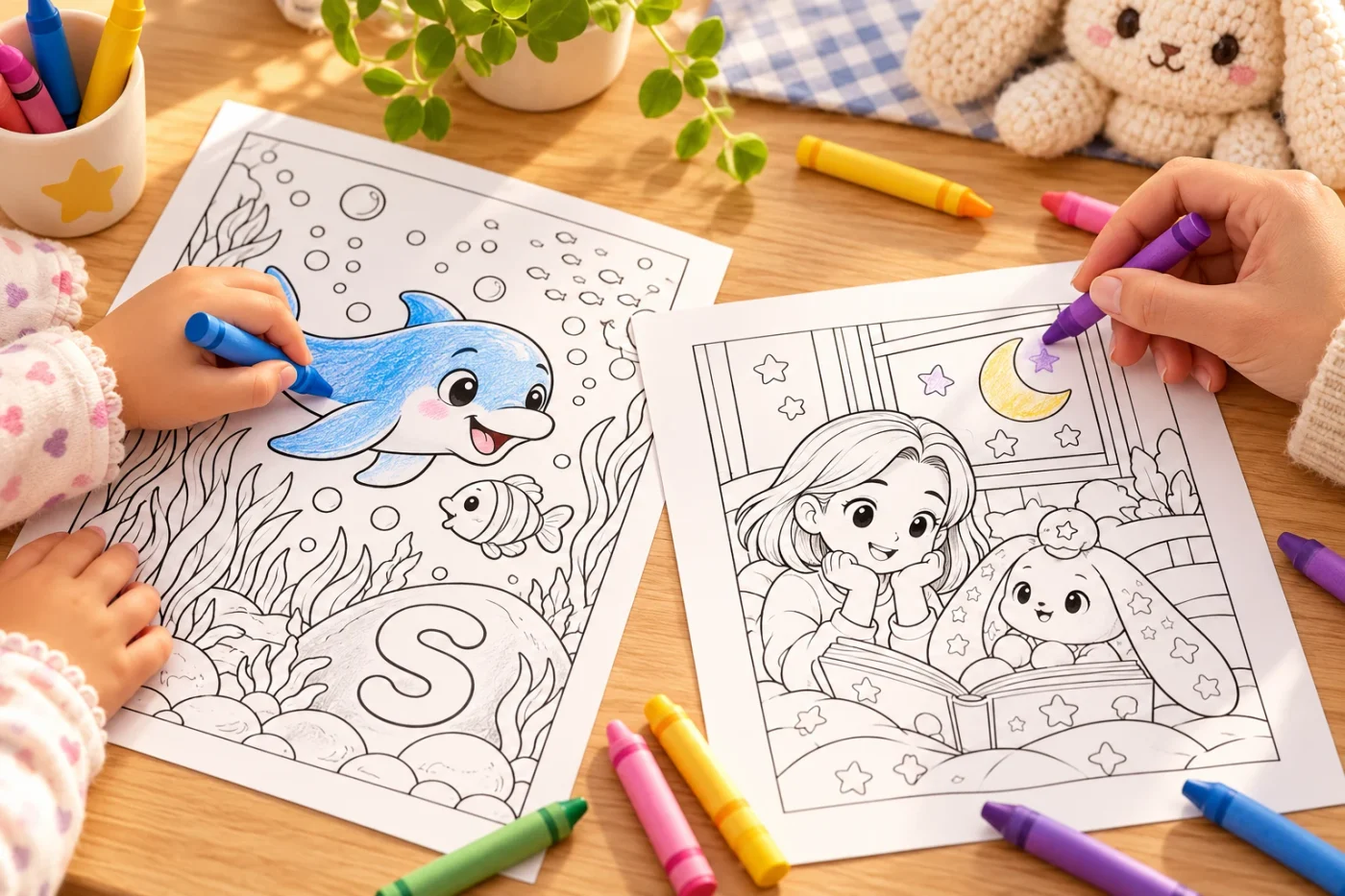
Place a few crayons within reach. Name a color as you offer it: “Would you like blue or yellow?” If your child prefers pointing, that is a useful response too.
You can look for something of the same color in the room, or compare two shades. Keep imaginative choices welcome. There is no requirement to color the dolphin like the cover or to keep every mark inside the lines.
Bring letters into a meaningful scene
WHIMO’s Word Coloring Books present one letter per page before showing the completed word. Use the picture to keep the word connected to something your child can notice or act out.
Say “swim,” move your hands like fins, then return to the printed word. Name a letter if your child is interested. An adult can make separate letter cards for matching, but independent reading is not required to enjoy the activity.
These are opportunities to practice noticing and talking, rather than a promise that coloring alone teaches reading.
Make room for feelings
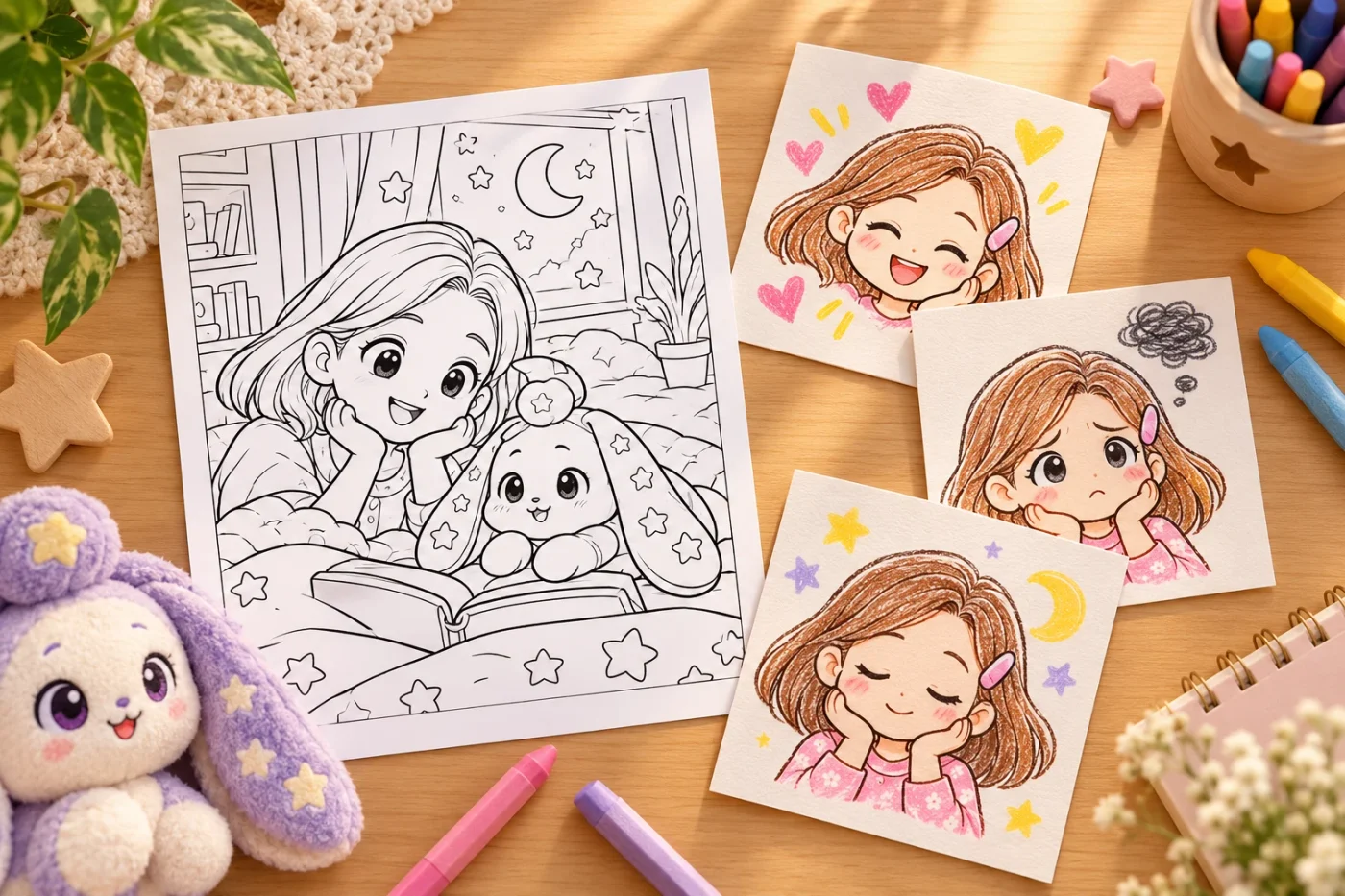
For a different kind of story, try Luno and the New Classroom. Its little girl and moon-and-stars bunny companion offer a way to talk about unfamiliar places and new friends.
Ask, “How might she feel?” rather than telling your child what the character must be feeling. You could draw simple happy, worried, and calm faces on separate cards and invite your child to choose one. These homemade cards are an optional activity extension.
If your child connects the story to their own experience, listen. If they do not, stay with the character. A coloring session does not need to become a personal conversation.
Try a flexible fifteen-minute play plan
Spend the first few minutes looking at one page and reading its accompanying text. Next, let your child color while you occasionally name a color or repeat a relevant word. End with a small choice: act out an action, match one letter, or talk about how a character might feel.
Fifteen minutes is a suggestion, not a target. Stop sooner if your child loses interest, or return to the activity another day. Following a familiar format can make preparation easier without making every session identical.
Choose the story that fits today
Use Dolly for an ocean word-and-color activity. Choose Luno and the Little Gathering to open a conversation about making friends, or Luno and the Little Broken Boat when exploring disappointment and helping each other feels relevant.
You can enjoy each book without covering every possible learning opportunity. One shared page, a few words, and an attentive adult are enough to start a playful conversation.
Ready for some screen-free fun?
Browse our printables